- Ryan Helmstetler
- November 16, 2026
Sales SPIFF Ideas: 12 Short-Term Incentives That Work


A well-designed SPIFF gets your team doing one specific thing, right now, without rewriting the comp plan. A badly designed one teaches reps to sit on deals until the next bonus shows up.
This guide covers what a SPIFF is, when to use one, 12 sales SPIFF ideas you can adapt, and the rules that keep a SPIFF from backfiring.
A SPIFF (also written SPIF, and commonly expanded as “sales performance incentive fund”) is a short-term bonus for a specific sales behavior or result. It sits on top of normal commission, runs for a fixed window, and pays everyone who hits the bar.
That last part is what separates a SPIFF from a contest. A contest ranks people and rewards the winners. A SPIFF rewards every rep who does the thing. For ranked formats, see our guide to keeping sales contests fresh.
Use a SPIFF when you need a short, focused change in behavior and the comp plan is not the right place to make it. Good moments include:
If the behavior you want is permanent, change the comp plan instead. A SPIFF that never ends is just commission with extra paperwork.
The dollar amounts below are examples only. Size every SPIFF to your deal values, margins and budget.
Goal: Get reps pitching something new before they fall back on what they already know.
How it works: Pay a flat bonus, for example $150, for each closed deal that includes the new product during the first 30 days after launch.
Watch out for: Reps bolting the product onto deals where it does not fit. Require it to be live or onboarded, not just on the contract.
Goal: More qualified first meetings.
How it works: Pay per first meeting that is held and accepted by an AE, not per meeting booked.
Watch out for: No-show inflation. Counting only held, accepted meetings solves most of it.
Goal: Fill next quarter’s pipeline before you need it.
How it works: Over two weeks, pay a small bonus for every new opportunity that reaches your qualified stage.
Watch out for: Junk opportunities. Pay only on opportunities that are still open and qualified 14 days after the blitz ends.
Goal: Better deal terms and cash flow.
How it works: Add a bonus for deals signed with a multi-year term or annual prepayment instead of monthly billing.
Watch out for: Discounts traded for term. Set a discount ceiling that the deal must stay under to qualify.
Goal: Bigger first deals.
How it works: Pay for every deal that includes a specific add-on, such as onboarding, premium support or a second product.
Watch out for: Add-ons the customer never uses. Tie payout to the add-on being delivered.
Goal: Unstick deals that have been sitting in one stage too long.
How it works: For two weeks, pay a bonus for each opportunity older than 60 days that moves forward a stage with a documented next step and a meeting on the calendar.
Watch out for: Stage changes with nothing behind them. The calendar meeting requirement keeps it honest.
Goal: Reopen closed-lost deals and former customers.
How it works: Pay for every former customer or closed-lost account that becomes a new qualified opportunity, with a larger bonus if it closes.
Watch out for: Reps cherry-picking accounts another rep lost. Agree on ownership rules before launch.
Goal: Lock in renewals before they become at risk.
How it works: Pay account managers a bonus for renewals signed more than 30 days before the contract end date.
Watch out for: Renewals pulled forward with a discount that would not have been needed. Keep the discount ceiling rule.
Goal: More introductions from happy customers.
How it works: Pay reps for every customer referral that turns into a held first meeting.
Watch out for: Asking too early in a relationship. Pair it with a list of customers who are clearly successful.
Goal: Collaboration instead of lone wolves.
How it works: If the team hits a shared target in the window, everyone on the team gets the bonus or the team gets a shared prize.
Watch out for: One rep carrying the team. Add a minimum individual contribution to qualify.
Goal: A CRM you can actually forecast from.
How it works: For one week, every rep whose open opportunities all have a next step, a close date in the future and a current amount gets a reward. This one works well with non-cash prizes.
Watch out for: One-week cleanups that decay. Run it right before a forecast cycle and show the hygiene metric on a live board afterward.
Goal: Faster ramp on a new pitch or product.
How it works: Reward reps who complete a certification and then run two live demos of the new material within 30 days.
Watch out for: Certifications completed and forgotten. The live demo requirement is what makes it stick.
One SPIFF, one behavior. If you stack three SPIFFs at once, reps chase the easiest and ignore the rest.
What counts, when the window opens and closes, when it pays, and who decides edge cases. Put the rules where reps will see them, not in an email they will lose.
Closed-won in the CRM? Signed contract? Paid invoice? Decide before launch. Paying on a later event protects you from deals that fall apart, but paying too long after the win weakens the effect. Many teams pay on the next payroll after the qualifying event.
Agree on a maximum payout before launch. Finance should never learn about a SPIFF from the payroll file.
A SPIFF that lives in a spreadsheet the manager checks on Fridays is invisible. Show who has qualified and how close everyone else is on a live board, and celebrate each qualifying deal the moment it happens.
Compare the target behavior in the window against the weeks before it. Then check the two weeks after. If results drop below baseline once the SPIFF ends, you probably pulled deals forward rather than created new ones.
Cash is simple and universally understood. Non-cash rewards, such as experiences, gear or extra time off, are often more memorable and easier to talk about, which spreads the recognition further. Many teams mix the two: cash for revenue-linked SPIFFs, prizes and points for activity and hygiene SPIFFs. Our post on points vs. prizes digs into the tradeoffs.
Whatever the reward, recognition is part of the payout. A rep who earns a SPIFF quietly gets the money. A rep who earns it in front of the team gets the money and the respect.
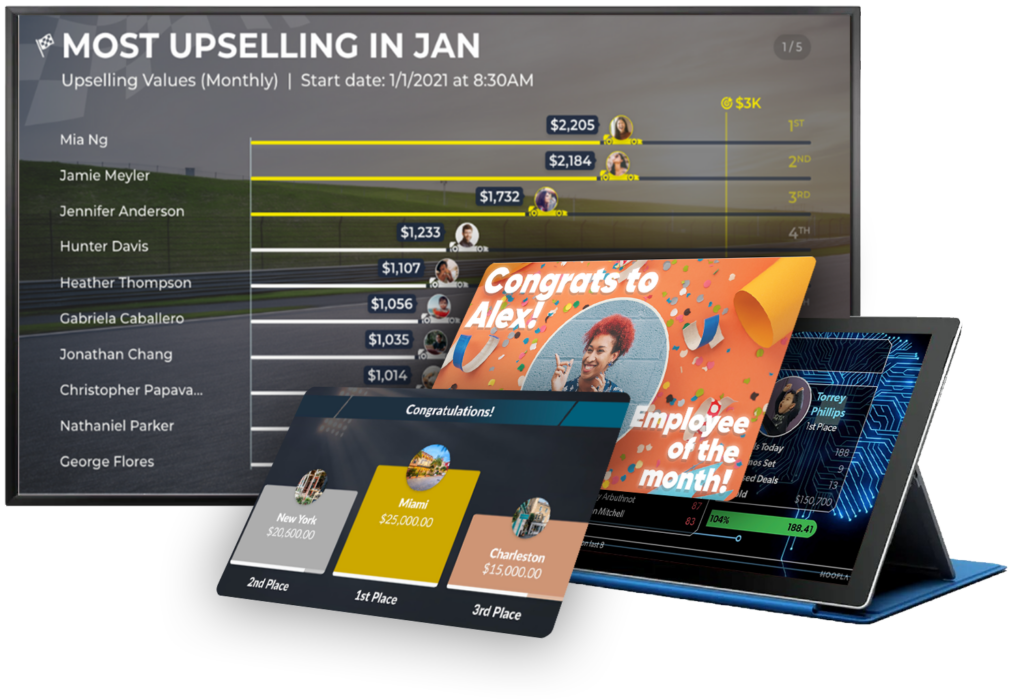
Hoopla makes a SPIFF visible from the first hour. Set it up as a challenge or race, and live leaderboards pull qualifying deals and activities automatically from Salesforce, HubSpot, Microsoft Dynamics, Talkdesk, Google Sheets and more. When a rep qualifies, a Newsflash celebrates it on every screen, including office TVs, phones, and Slack or Microsoft Teams.
For non-cash SPIFFs, the built-in rewards store lets reps redeem points for prizes, including custom company prizes you define. It is all part of Hoopla’s sales gamification software, and most teams go live in 24 hours.
Want to see your next SPIFF tracked live on your own CRM data? Book a demo, or ask about the free, fully supported 30-day trial.

Read More >

Read More >

Read More >